
PROOF – Research to identify policy options to reduce food insecurity
The PROOF project website offers research, reports and webinars that explore policy interventions relating to food insecurity.
The PROOF project website offers research, reports and webinars that explore policy interventions relating to food insecurity.
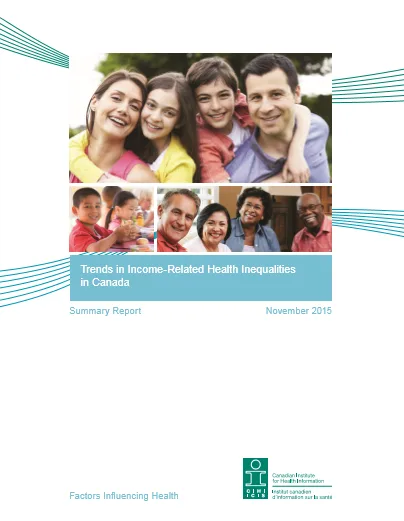
This collection of resources documents the trend in income-related health inequalities in Canada for 16 health indicators over the past 10 years. This is a one-stop-shop for national, provincial and territorial data on the topic, and includes a public summary and info graphics.
This paper presents findings on two surveys of how public health professionals exchange knowledge and act to improve the social determinants of health and health equity in digital spaces like social media.
A groundswell of interest has emerged recently in using collective impact (CI) to tackle entrenched social problems. This blended case story describes two CI initiatives in which public health is significantly involved: London Ontario’s Child & Youth Network and The Child & Youth Health Network on Vancouver Island.

This report provides an analysis of food costing data in one area of Northern Ontario as an example to highlight the elevated cost and decreased affordability of food in northern First Nations communities. The disproportionately high incidence of food insecurity in these communities is also discussed.

Upstream and Saskatoon Health Region’s Population and Public Health group detail the results of a HEIA they conducted on the City of Saskatoon’s recently released growth plan. Growing healthier offers 13 recommendations for direct action that will enhance Saskatoon’s community health and well-being.
This action guide is the culmination of a National Quality Forum project in the U.S. which used a multi-stakeholder collaborative process to develop a common framework and practical guidance for improving population health.

The aim of this report is to contribute to Professor Sir Michael Marmot’s Presidency of the World Medical Association and to support the WMA’s Declaration of Oslo on the Social Determinants of Health.
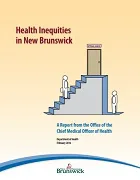
This report presents data revealing the unequal distribution of social determinants and health status in New Brunswick. It “is meant to stimulate individual and collective interest and facilitate conversations to address this important issue which affects all New Brunswickers…” (p. 5)
Summary of key global and national health inequality monitoring tools from the World Health Organization, including information about how to use them.
We have a new look! Explore our redesigned website.
Find all the same content and features with a refreshed look. Be patient with us, we are actively working on finding and fixing glitches and bugs that resulted from this big transition. If you find something that’s not working as you think it should please let us know at nccdh@stfx.ca.