
Cette ressource est également disponible en français.
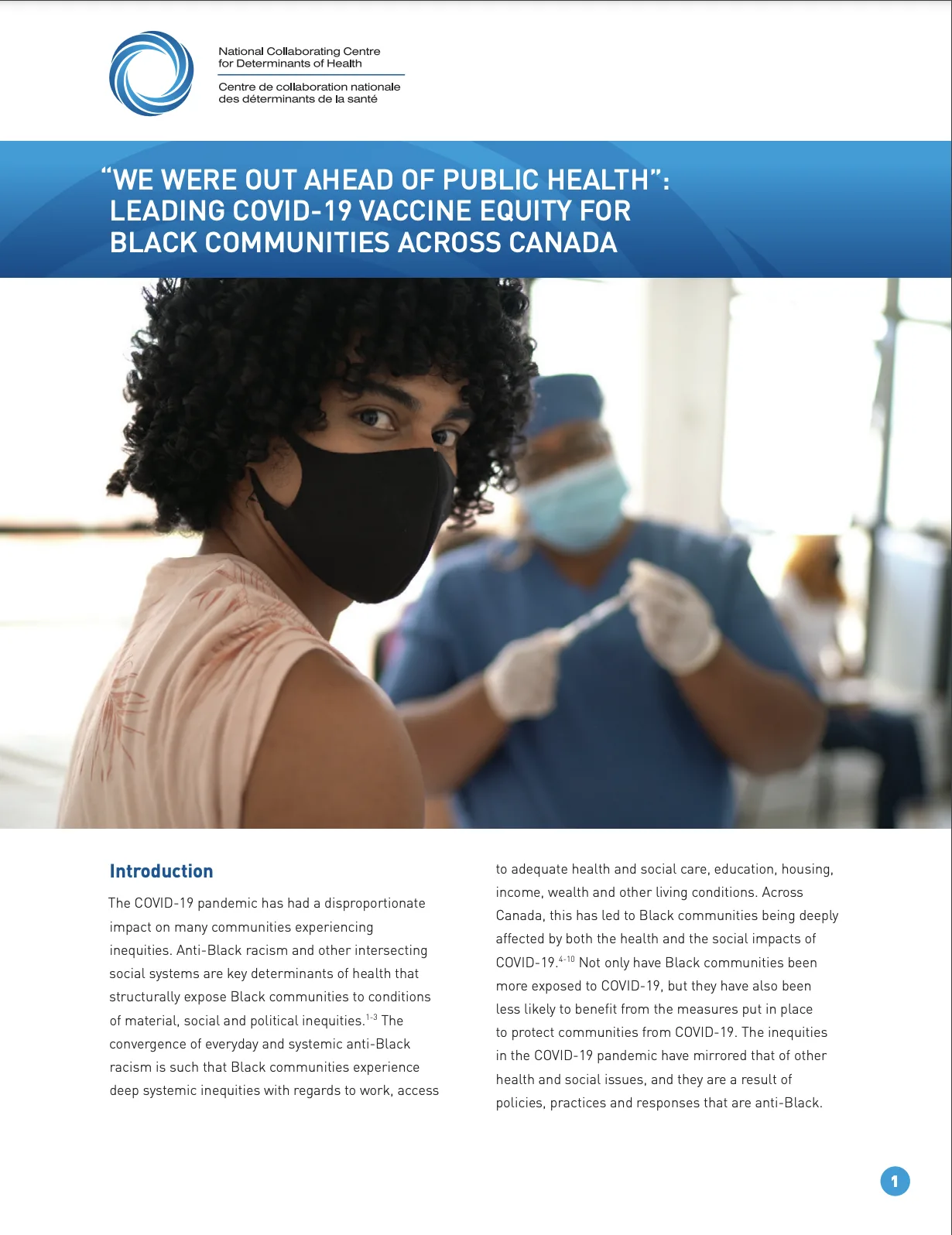
This report presents the findings from an NCCDH project to identify barriers and promising approaches to COVID-19 vaccine access, uptake and equity for Black communities.
Analysis of organizing, barriers and interventions
The author, Sume Ndumbe-Eyoh, explores three broad themes in the analysis of her interviews with key informants from across Canada:
- In the absence of consistent public health responses, Black communities have been organizing their own COVID-19 responses.
- There are a variety of barriers that make it difficult for Black communities to trust the vaccines and the systems promoting them.
- A number of approaches to support vaccine uptake and equity have been identified, including (but not limited to):
- acknowledging historical and contemporary anti-Black racism in the health system;
- amplifying multisectoral Black community leadership; and
- developing appropriate communication and education.
Use this resource to
- understand underlying reasons for vaccine hesitancy and inaccessibility in Black communities and culturally relevant and respectful ways to address them;
- mobilize your public health organization to incorporate promising practices identified in this report into vaccination program planning and implementation; and
- connect to Black community leaders to identify opportunities to support, partner and coordinate on community-led and community-specific strategies to improve vaccine uptake and equity.
Reference
National Collaborating Centre for Determinants of Health. (2021). “We were out ahead of public health”: Leading COVID-19 vaccine equity for Black communities across Canada. Antigonish, NS: NCCDH, St. Francis Xavier University.