
Health Equity Tools 2.0
This inventory from the University of Victoria’s Equity Lens in Public Health (ELPH) project describes 112 tools that public health practitioners can use to support the systemic promotion of health equity.
This inventory from the University of Victoria’s Equity Lens in Public Health (ELPH) project describes 112 tools that public health practitioners can use to support the systemic promotion of health equity.

Rooted in the premise that everyone deserves a life out of poverty, this compendium of writings offers considerations for policy makers and governments to inform next steps in testing basic income and rethinking welfare in Ontario.

This paper from the Northern Policy Institute outlines evidence to support a basic income guarantee as the most effective policy intervention for addressing food insecurity among vulnerable populations. It also provides an overview of how Ontario’s socioeconomic patterning relates to income of food insecurity in the province.
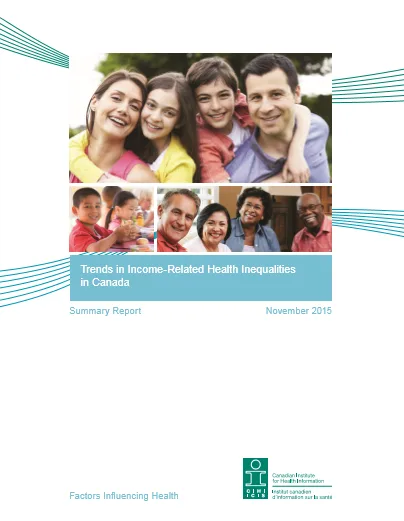
This collection of resources documents the trend in income-related health inequalities in Canada for 16 health indicators over the past 10 years. This is a one-stop-shop for national, provincial and territorial data on the topic, and includes a public summary and info graphics.

The seventh release in our Let’s Talk series discusses racism as a critical factor that impacts health and wellbeing. The concepts of race, racism and racialization are described, with attention to settler colonialism and structural racism.
This briefing note introduces public health stakeholders to eight broad, and commonly used approaches to reducing health inequalities. The note also aims to help readers distinguish between these eight approaches.
The six NCCs for Public Health collaborated on a project to increase understanding of population mental health promotion for children and youth. Together, they developed a collection of documents to mobilize knowledge, clarify key concepts, and strengthen public health practice in this area.
This paper presents findings on two surveys of how public health professionals exchange knowledge and act to improve the social determinants of health and health equity in digital spaces like social media.
Leading thinkers and practitioners in the area of food insecurity engage in discussion about how public health practice can move beyond a charity focus to addressing food insecurity and take action through upstream policy solutions.

This curated list offers resources that support collaborative action in the process of working with multiple partners to advance health equity.
We have a new look! Explore our redesigned website.
Find all the same content and features with a refreshed look. Be patient with us, we are actively working on finding and fixing glitches and bugs that resulted from this big transition. If you find something that’s not working as you think it should please let us know at nccdh@stfx.ca.