
The impact of inequities, poverty and racism on the health of children
In this blog post, Knowledge Translation Specialist Dianne Oickle discusses how inequities in early childhood have a longstanding effect on a person’s health outcomes.

In this blog post, Knowledge Translation Specialist Dianne Oickle discusses how inequities in early childhood have a longstanding effect on a person’s health outcomes.

In this blog post, NCCDH Knowledge Translation Specialist Dianne Oickle introduces the goals of the NCCDH’s recent product package focusing on public health action on housing insecurity.

Imagine the world in 2048. What do you see? I imagine a world in which a greater proportion of humanity gets to partake in the beauty and bounty the world has to offer while being buffered from more of its downsides. It brings to mind what Arundhati Roy imagines as “another world.” In this “another world” described by Roy, three things will be central to health promotion practice.
In this memorandum to the Québec Government (in French only), Montreal and Montérégie’s public health directors advocate for changes to provincial employment legislation that could have deleterious effects on the health of social assistance recipients in their region.
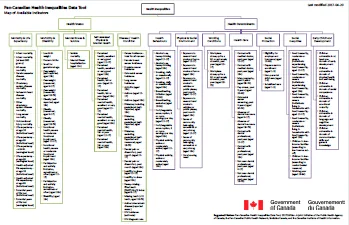
The Pan-Canadian Health Inequalities Reporting Initiative’s health inequalities data tool is a user-friendly, web-based tool that can be used to inform decisions relating to surveillance, research, programming and policies that address health inequities among population groups in Canada.
This theoretical article argues that pro-market and reduced public service philosophies set in place by rich nations are creating sub-citizens at a biological level. Sparke argues that even our efforts to reduce these inequities contain pro-market thinking that does harm.
In this analysis from University of Ottawa researchers Arne Ruckert and Ronald Labonté, the authors address the impact that the austerity measures taken in response to the 2008 global financial crisis had on social policy and health equity.

Rooted in the premise that everyone deserves a life out of poverty, this compendium of writings offers considerations for policy makers and governments to inform next steps in testing basic income and rethinking welfare in Ontario.
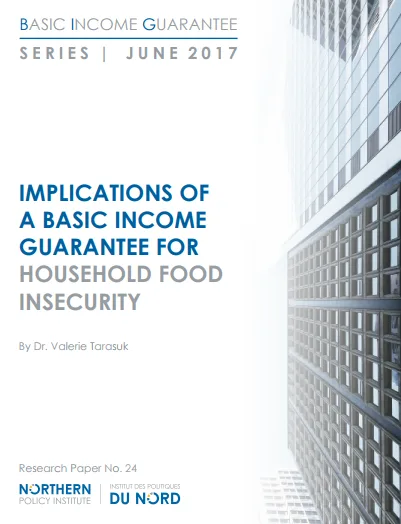
This paper from the Northern Policy Institute outlines evidence to support a basic income guarantee as the most effective policy intervention for addressing food insecurity among vulnerable populations. It also provides an overview of how Ontario’s socioeconomic patterning relates to income of food insecurity in the province.
The PROOF project website offers research, reports and webinars that explore policy interventions relating to food insecurity.