
Healthy Living: Public policy makes a difference
A brief video describing how public policy can support healthy living, told through the stories of two low-income mothers in Vancouver.
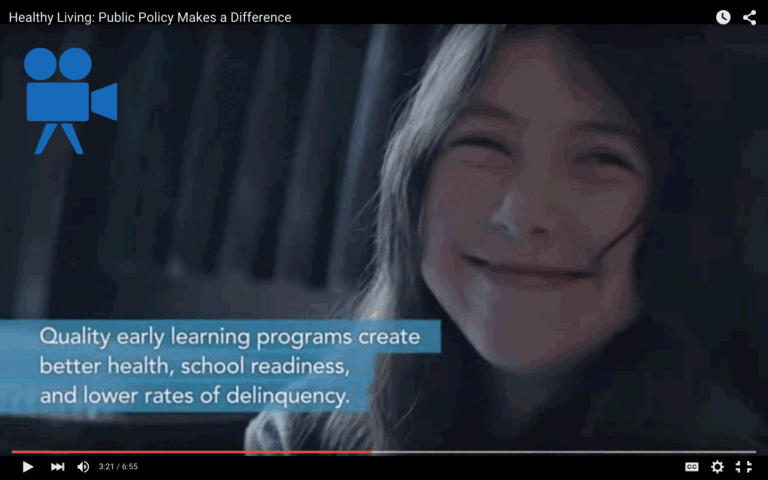
A brief video describing how public policy can support healthy living, told through the stories of two low-income mothers in Vancouver.

In this three minute interview segment, Connie Clement, Scientific Director of the NCCDH, describes the fundamental components needed for a Canada-wide, health equity agenda, and the first actions required to move that agenda forward.
“Social advocacy is central to the mission of public health and a significant responsibility for public health professionals.” – Dorfman, Sorenson & Wallack (2009), pg. 15 This webinar will further explore the 4 public health roles in advocacy for health equity as described in the new Let’s Talk: Advocacy and health equity. Guest presenters will

This addition to the NCCDH’s “Let’s Talk” series discusses advocacy within public health. Attention is brought to the shift towards advocacy in upstream policy and structural change. Discussion questions are included to help public health staff examine their work.
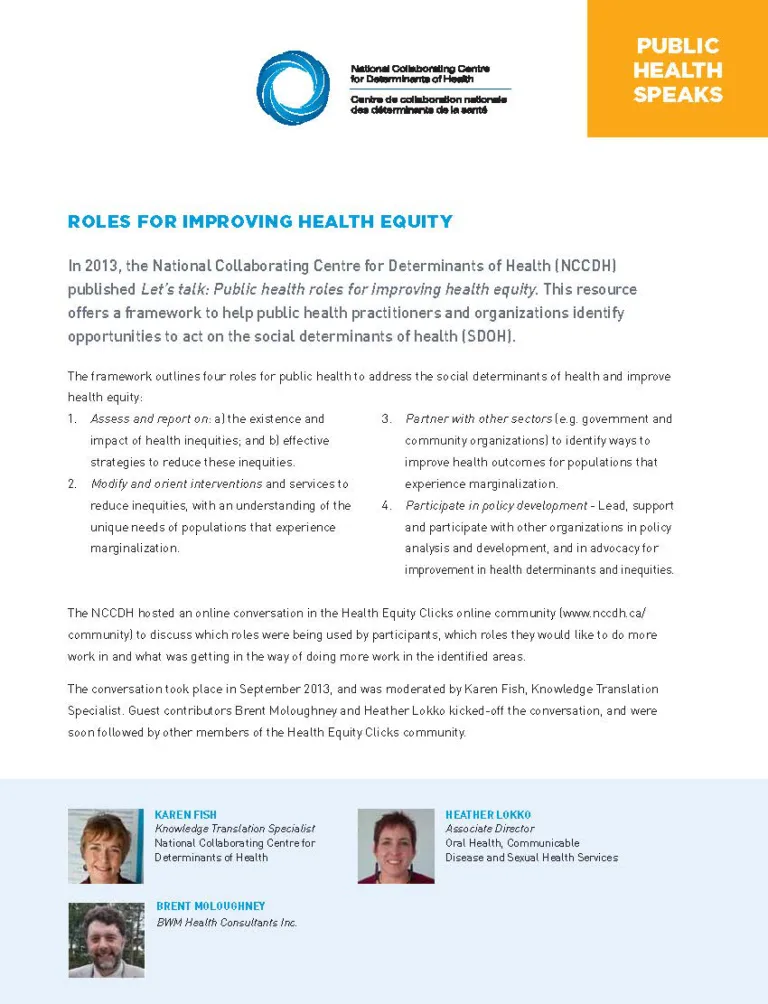
This document summarizes an online conversation—hosted by the NCCDH in 2013— about the use and value of a four-role model for public health action to improve health equity.
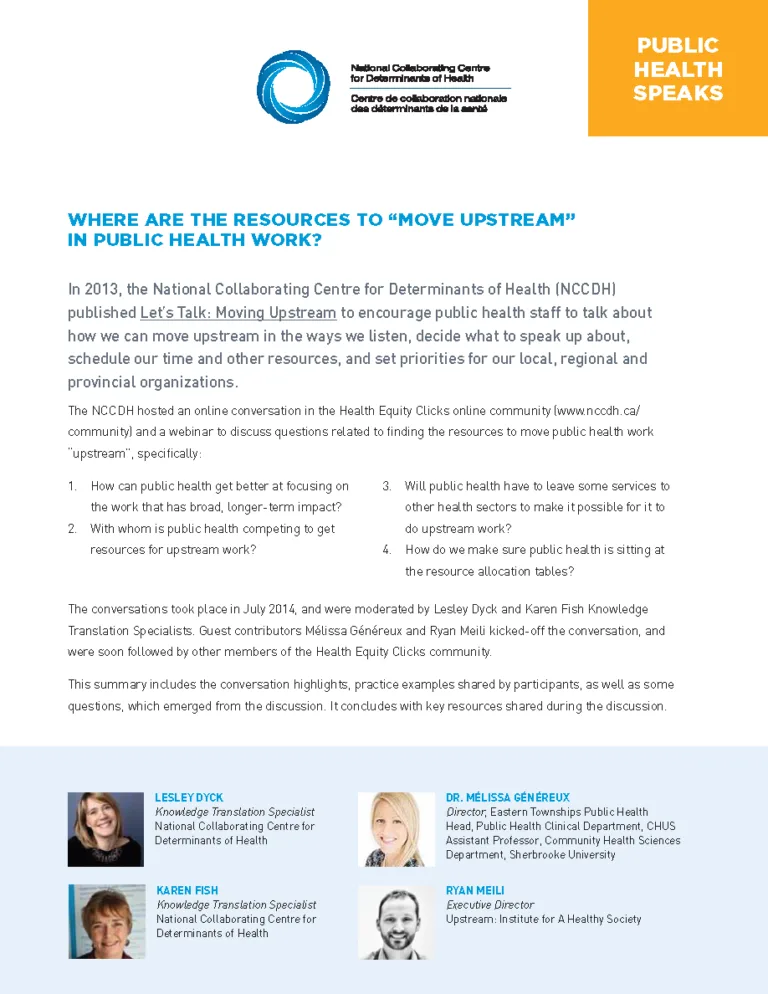
This document summarizes an online conversation—hosted by the NCCDH in 2014— about finding resources to move public health work upstream.
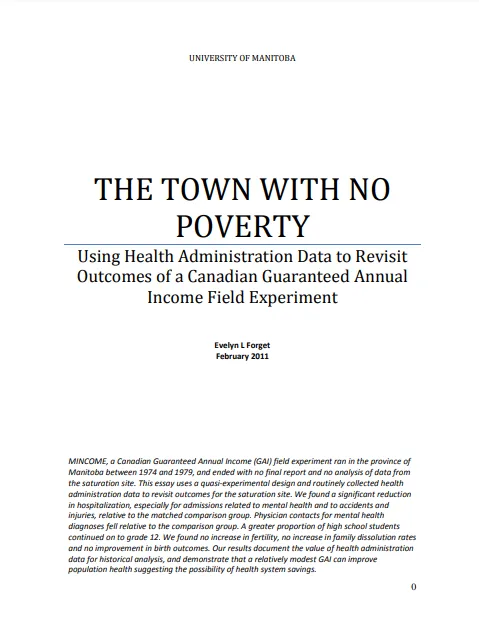
The author of this report analyzed routinely collected health administrative data to re-examine the health and social outcomes/effects of a guaranteed annual income experiment carried out in Dauphin, Manitoba in the mid-1970s.

This report lays the foundation for a Health Equity Action Plan for the city of Winnipeg. The document provides a framework for understanding and collaboratively addressing health equity by introducing principles, strategies, and suggested areas for action.
The authors of this document analysed the application of health equity assessment tools (HEATs) in Australia, New Zealand, United Kingdom and Canada to identify facilitators and barriers to success.
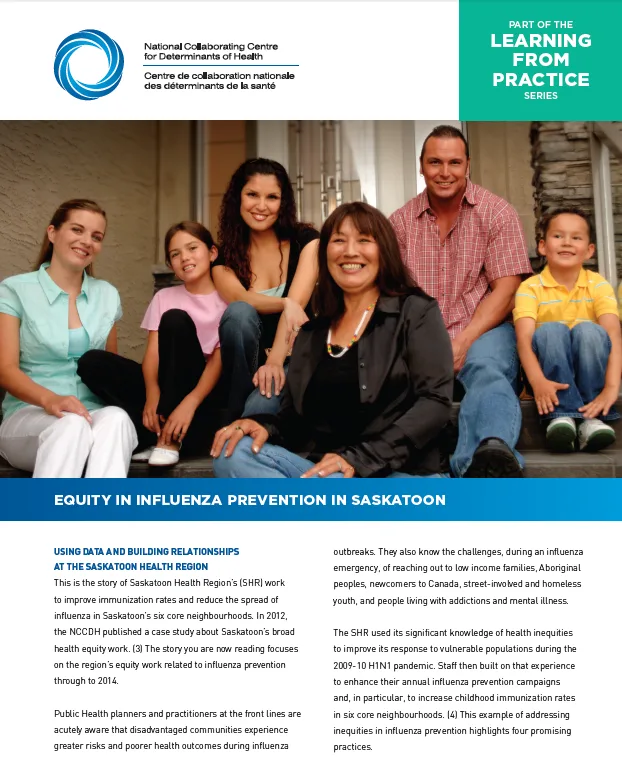
This is the story of Saskatoon Health Region’s (SHR) work to improve immunization rates and reduce the spread of influenza in Saskatoon’s six core neighbourhoods. SHR’s existing strong socio-economic and health disparities data made it possible to prioritize these core neighbourhoods for H1N1 vaccination programs.