
Upstream action on food insecurity: A curated list
This curated list offers tools and resources to facilitate action on policy solutions related to food insecurity.
This curated list offers tools and resources to facilitate action on policy solutions related to food insecurity.
Leading thinkers and practitioners in the area of food insecurity engage in discussion about how public health practice can move beyond a charity focus to addressing food insecurity and take action through upstream policy solutions.

The Ontario Dietitians in Public Health’s food security working group reviewed and compiled research to support implementation of income-based policy approaches to reduce poverty as the most effective way to address food insecurity.

This report provides an analysis of food costing data in one area of Northern Ontario as an example to highlight the elevated cost and decreased affordability of food in northern First Nations communities. The disproportionately high incidence of food insecurity in these communities is also discussed.
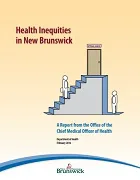
This report presents data revealing the unequal distribution of social determinants and health status in New Brunswick. It “is meant to stimulate individual and collective interest and facilitate conversations to address this important issue which affects all New Brunswickers…” (p. 5)

This website has links to materials and resources to support action on food security, including local research evidence. In addition, the site features a model of approaches to achieve a sustainable food system, and the option to bookmark resources to a personalized “action portfolio.”
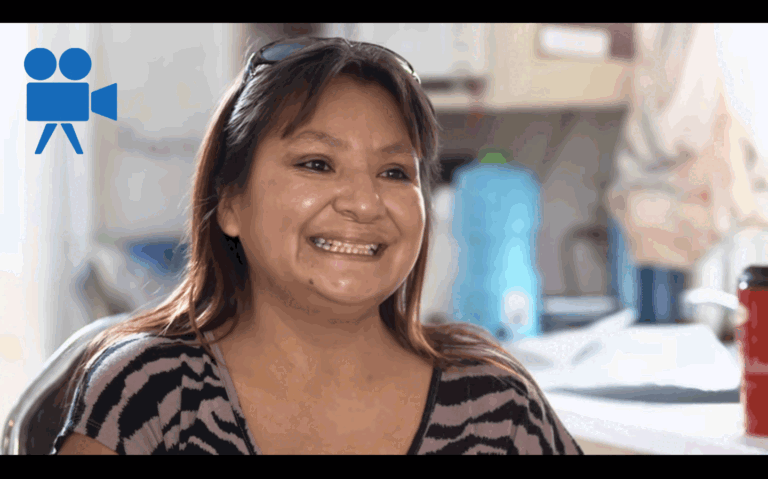
Hurdles to Health is a personal narrative about a Saskatoon family, shared by a wife and mother of a low-income household. This video shows the family’s daily struggles caused by the barriers poverty creates to achieving overall health and wellbeing.
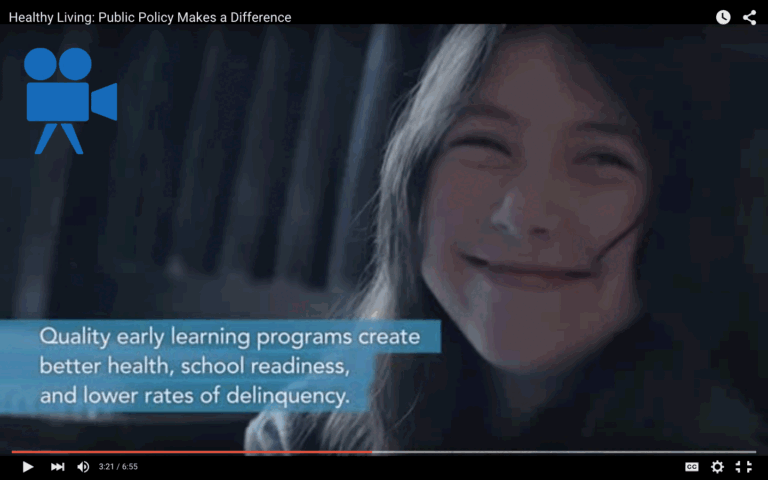
A brief video describing how public policy can support healthy living, told through the stories of two low-income mothers in Vancouver.

Dr. Lynn McIntyre, Professor and CIHR Chair in Gender and Health, University of Calgary and President of the Canadian Public Health Association, shows how financial policy affects people’s ability to purchase nutritious food.
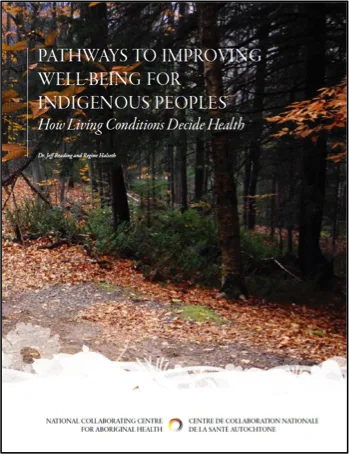
This paper highlights the interconnectedness between social determinants and Indigenous peoples’ health. The authors argue that efforts to reduce current health inequities between Indigenous and non-Indigenous peoples must attend not only to the symptoms of ill health, but also to the factors that underlie ill health.
We have a new look! Explore our redesigned website.
Find all the same content and features with a refreshed look. Be patient with us, we are actively working on finding and fixing glitches and bugs that resulted from this big transition. If you find something that’s not working as you think it should please let us know at nccdh@stfx.ca.