
Tenfold podcast
This podcast series from the Public Health Training for Equitable Systems Change (PHESC) project features 10 individual episodes exploring different aspects of community engagement to inform public health action on health inequities.

This podcast series from the Public Health Training for Equitable Systems Change (PHESC) project features 10 individual episodes exploring different aspects of community engagement to inform public health action on health inequities.
This guide from Greer, Newman Burmeister and the rest of the Peer Engagement and Evaluation Project (PEEP) team offers tools and strategies for engaging peers in decision-making about harm reduction initiatives. It is based on participatory research with community members who experience inequities in substance use harms.
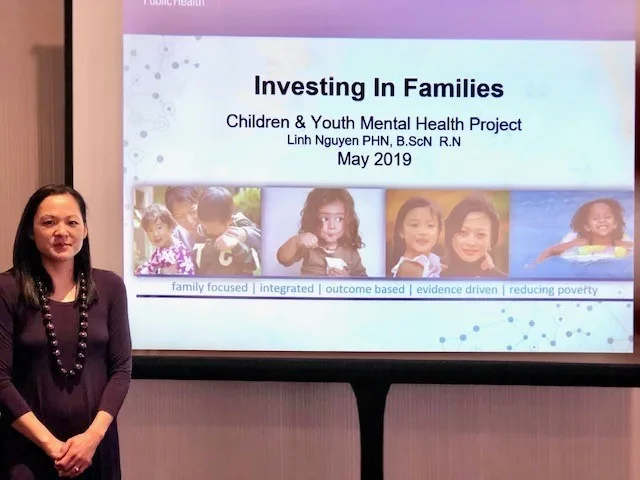
This blog post highlights an interdivisional resiliency project presented by Public Health Nurse Linh Nguyen (Toronto Public Health, pictured above) at the 2019 Community Health Nurses of Canada (CHNC) Conference in Saint John, New Brunswick. Contributors to this post also include Patricia Stevens, health promotion specialist, and Nicolette Slovitt, child health and development manager at Toronto Public Health.
This planning tool from the Fraser Health Authority (BC) offers support for public and community health agencies to develop interventions and programs that address health equity at all stages. It includes guidance, worksheets and a seven-step framework.

This environmental scan from Inuit Tapiriit Kanatami highlights promising practices in suicide prevention across the four regions of Canada’s Arctic that make up Inuit Nunangat. The resource also includes a useful discussion of barriers, gaps and opportunities for future action.
This event took place in English. Community engagement (CE) is an important step towards understanding the unique circumstances facing populations living with inequities. This is especially true when considering these communities’ opportunities and barriers to achieving health. Having authentic and ongoing relationships with communities that experience marginalization – beyond one-time engagement events or client satisfaction
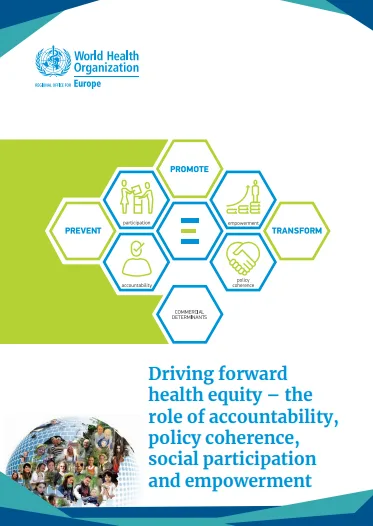
As part of the World Health Organization (WHO) European Health Equity Status Report initiative, a scientific expert review asked why more progress had not been made on advancing health equity in the region. The review also identified four key drivers of health equity: accountability, policy coherence, social participation and empowerment.
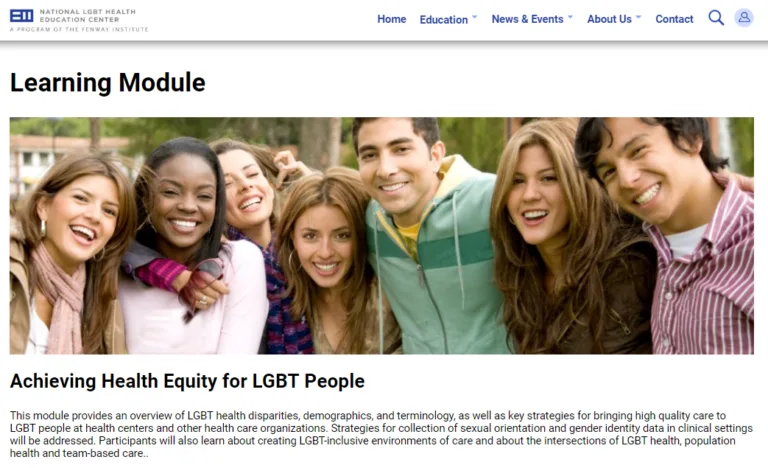
This interactive online module from the National LGBT Health Education Center explores health inequities experienced by LGBT (lesbian, gay, bisexual, transgender) communities and how to address associated healthcare disparities and impact on population health.
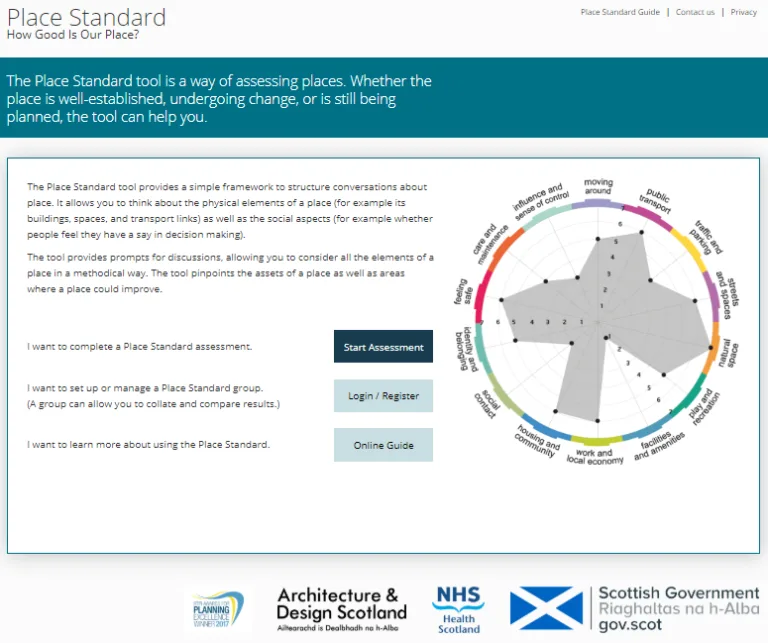
NHS Scotland’s Place Standard Tool is a planning framework to assess the quality of both rural and urban places, designed to support communities, public and private sectors, businesses and citizens to identify improvements to physical and social aspects of the places where people live.
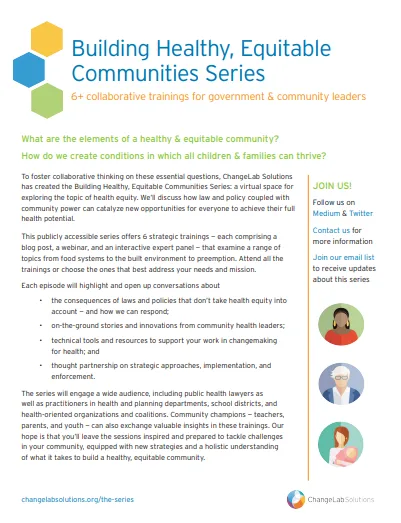
Building Healthy, Equitable Communities is a series of six training modules by ChangeLab Solutions. The series is focused on addressing health inequities through policy development that is geared to meet the needs of communities at risk of structural and health inequities.