A guide for a community-based COVID-19 recovery
This guide from the Tamarack Institute focuses on community-based response to recovery from COVID-19.
Ce webinaire de l’organisme Making Health Happen porte sur la fonction de responsable de l’équité dans le comté de Washington, en Oregon, durant la pandémie de COVID-19.
In this resource, Human Impact Partners offers specific actions public health departments can take to help end police violence.
This event took place in English. Canadians’ COVID-19 vaccine confidence has improved over time, but significant inequities in vaccine uptake remain. Communities with the highest health and social burden of COVID-19 are also those with the lowest levels of vaccine access and uptake. This highlights the continuing impacts of the social and structural determinants of
This 2021 report from the Black Health Equity Working Group outlines the Engagement, Governance, Access and Protection (EGAP) Framework for the collection and use of race-based data from Black communities to advance health equity and dismantle systemic racism.
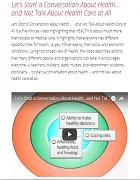
This installment of the Let’s Talk series defines community engagement for health equity and encourages viewing community members as stakeholders and partners in public health decision-making. As a resource, it explores key practices and actions for public health to build capacity for authentic engagement with communities that live with inequities.
This webinar from the World Health Organization focuses on the importance of social participation and investing in mechanisms to dialogue with people and communities in relation to COVID-19. More specifically, it explores these topics as they relate to strengthening emergency responses.
Released in October 2020, this annual report of the Chief Public Health Officer (CPHO) of Canada reviews how the COVID-19 pandemic has exacerbated inequities across the country. This year’s edition builds on the CPHO’s 2019 report, titled Addressing stigma towards a more inclusive health system.
This guide from the Urban Sustainability Directors Network proposes a framework that places those who are most vulnerable to climate change at the centre of preparedness and adaptation planning. It draws on evidence and knowledge related to racial equity, climate change and community engagement.
This journal article from Ramsbottom et al. presents the findings from a literature review identifying enablers and barriers to collaboration between communities and institutions for emergency preparedness.
We have a new look! Explore our redesigned website.
Find all the same content and features with a refreshed look. Be patient with us, we are actively working on finding and fixing glitches and bugs that resulted from this big transition. If you find something that’s not working as you think it should please let us know at nccdh@stfx.ca.