La santé publique a la parole : la tuberculose et les déterminants sociaux de la santé
Des praticiennes de la santé publique discutent des stratégies pour agir sur les déterminants sociaux ayant une incidence sur la tuberculose.
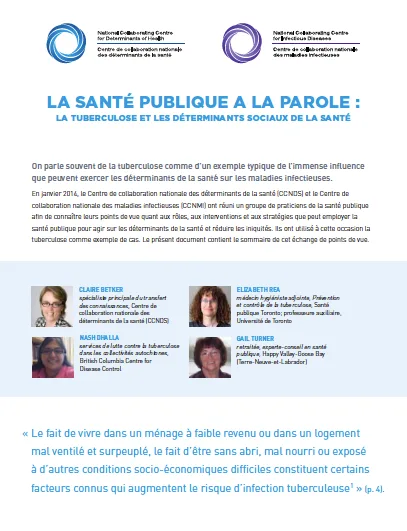
Des praticiennes de la santé publique discutent des stratégies pour agir sur les déterminants sociaux ayant une incidence sur la tuberculose.
This paper highlights the interconnectedness between social determinants and Indigenous peoples’ health. The authors argue that efforts to reduce current health inequities between Indigenous and non-Indigenous peoples must attend not only to the symptoms of ill health, but also to the factors that underlie ill health.
Do you want to monitor or measure inequalities in health in your region? This online book from the South East England Public Health Observatory (SEPHO) provides an array of methods to monitor and measure inequalities at a local level.
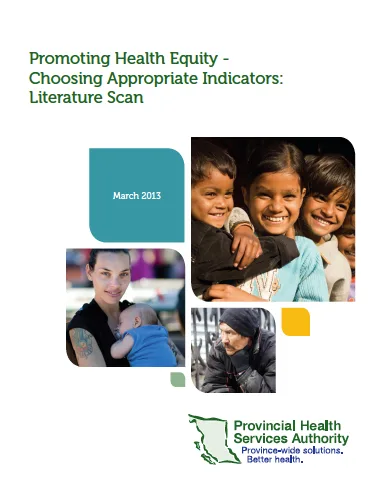
This literature scan describes a set of health equity indicators and recommends a decision-making process to identify a common set of indicators for British Columbia.
This inventory describes 36 tools that public health practitioners can use to support the systemic promotion of health equity.
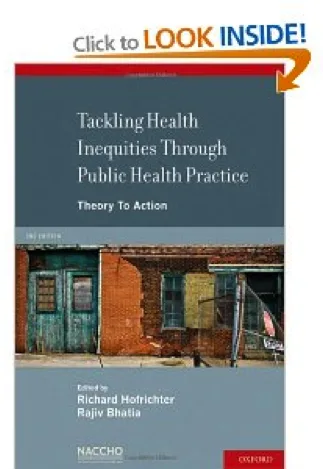
Published by the National Association of County and City Health Officials (NACCHO), this book includes political analysis and practice examples to support the re-orientation of public health practice to address the root causes of health inequities.
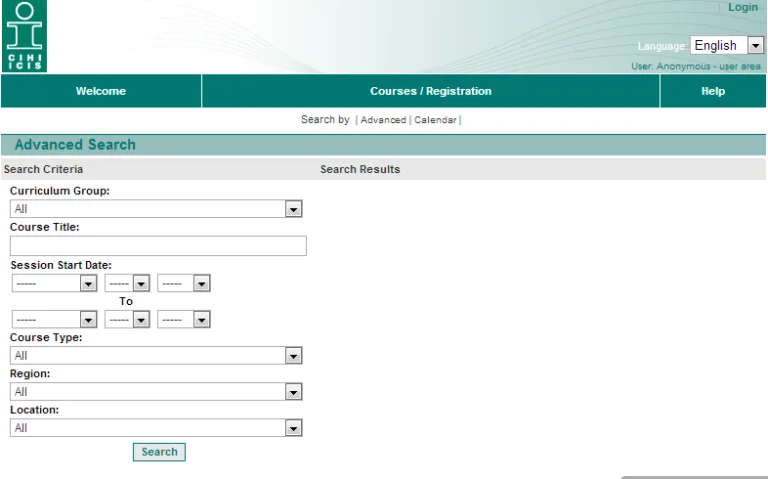
This free, one-hour course explores how bringing together health and socio-economic data can help health professionals better understand the links between population characteristics and population health outcomes.
This free, six to 12 hour course is designed using case studies to teach public health practitioners how to conduct a health impact assessment (HIA). The course was developed by the National Health Service in Scotland, which has produced an impressive eLearning program of study.
This free, skill-building course teaches why and how to conduct a health equity impact assessment (HEIA), and gives learners opportunities to complete up to five HEIA templates – a tool designed by the Ontario Ministry of Health and Long-Term Care – based on five case studies.
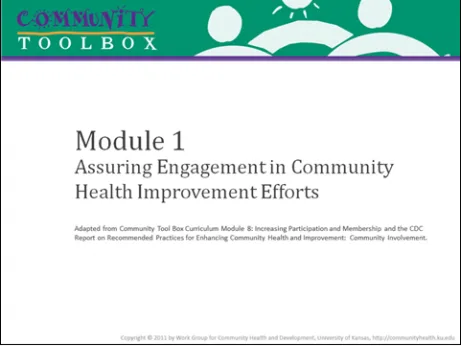
This free, eight-part series of online courses (30 to 45 minutes each) helps learners build the skills they need to support community health assessment and health improvement work.